

At R.M. Young, accuracy isn’t something we assume, it’s something we verify.
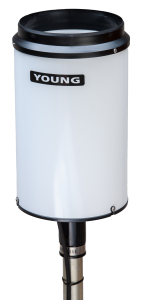
Our tipping bucket rain gauges are designed for long-term, reliable rainfall measurement in the field. With a 200 cm² catchment area and 0.1 mm resolution, each tip represents a precise, measurable volume of rainfall. It’s a simple, time-tested design, but one that depends on exact calibration to deliver our standard of consistent, reliable data. That’s why every tipping bucket rain gauge is verified before it leaves our facility.
These instruments are built to perform for years with minimal maintenance. But before they’re installed in the field, we take the time to ensure each unit is operating exactly to specification.
Simulating Rainfall with Controlled Testing
Each tip of the bucket must correspond to a known volume of water. For our gauges, that means 2.0 mL per tip, based on the catchment area and resolution, so it’s vital to calibrate them to ensure data accuracy.
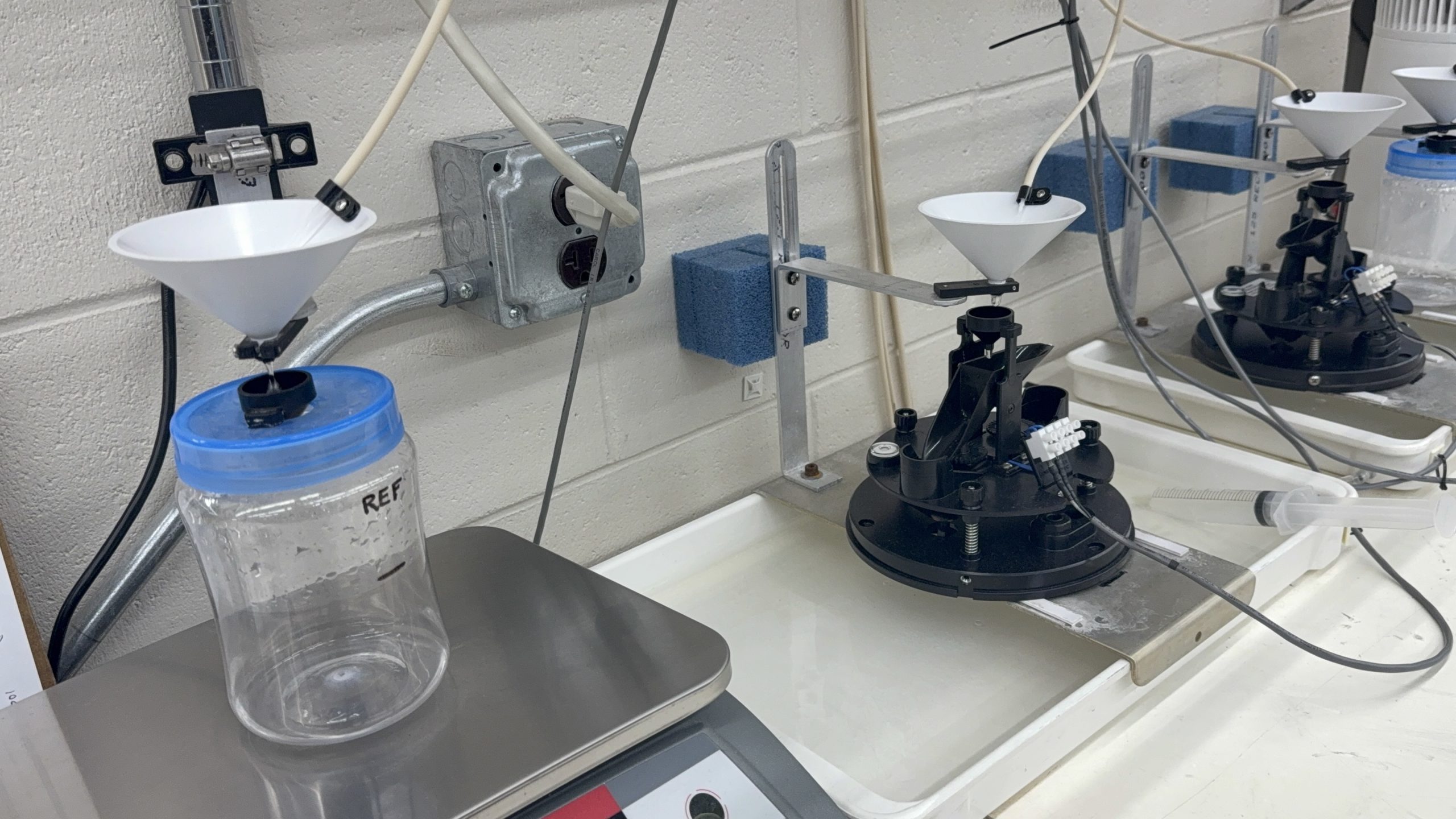
To calibrate our tipping bucket rain gauges, we use an automated drip system that delivers a controlled, consistent flow of water. Each test is designed to simulate real rainfall conditions, allowing us to evaluate how the gauge performs under steady input. We run up to three gauges at a time, ensuring efficiency while also providing immediate comparison across units. Consistency is key. If one gauge behaves differently, we see it right away.
During each calibration run, we don’t just rely on programmed inputs, we verify the actual volume delivered. Water is collected and measured independently, ensuring that the rainfall being simulated is accurate and traceable. This allows us to compare the gauge’s output against a known, confirmed volume, rather than an assumed one. It’s a simple step, but one that adds a critical layer of confidence.
As water flows through the gauge, each tip triggers a magnetic reed switch—a clean, reliable signal that is counted and converted into rainfall totals. Using our Meteorological Translator, we monitor this output in real time. The system logs each tip and calculates cumulative rainfall, allowing us to compare measured output against expected values. For example, a 20 mL input should produce exactly 1.0 mm of rainfall. If it doesn’t, we know immediately and adjust accordingly.
We then ensure that each tipping bucket meets our specs (±2% accuracy up to 25 mm/hr and ±3% accuracy up to 50 mm/hr). If a unit falls outside of that tolerance, we make precise mechanical adjustments to the bucket balance. These small changes directly affect the tipping point, bringing the measurement back into specification. Each gauge is retested multiple times to confirm consistency before it’s approved.
Every calibration is documented, including:
- Delivered water volume
- Verified collected volume
- Recorded rainfall output
- Any adjustments made
- Final confirmed accuracy
By the time a tipping bucket rain gauge ships, it has been tested against a known standard and verified to perform as expected. That’s the level of confidence we expect (and the level our customers rely on).
Once deployed, the tipping bucket rain gauge outputs a simple, reliable reed switch closure for each tip. This open contact signal integrates easily with a wide range of data loggers, telemetry systems, and environmental monitoring platforms. Whether using our Translator or a third-party system, the output remains consistent, accurate, and easy to work with.
Accuracy You Can Trust from Day One
The calibration process itself is straightforward, but the impact is significant. Running multiple gauges in parallel, verifying against measured volumes, and confirming performance within strict tolerances ensures that every instrument performs as specified right out of the box.
Because in environmental monitoring, accuracy isn’t optional. It’s the foundation for everything that follows.