

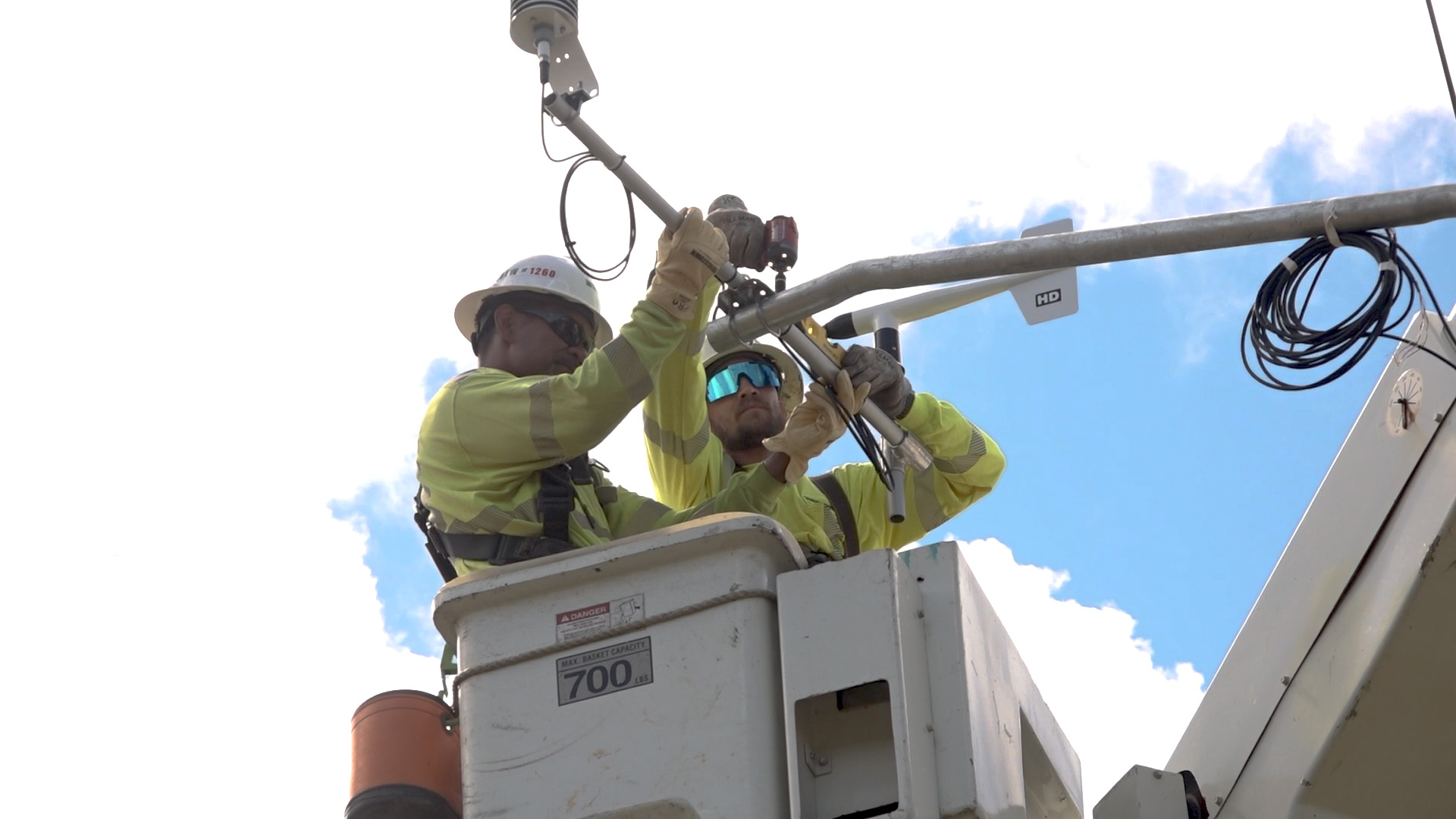
When Hawaiian Electric began rethinking its approach to weather monitoring, the goal wasn’t just better data. It was protecting lives, strengthening resilience, and building trust in one of the most complex climates on Earth.
Hawaii’s terrain is as challenging as it is beautiful. Within a few miles, steep volcanic ridges, arid valleys, and rain-soaked forests can create sharp contrasts in temperature, humidity, and wind. “Due to our terrain, the Hawaiian Islands have numerous microclimates that exist simultaneously in close proximity to each other,” explained Shari Ishikawa, Operations Superintendent at Hawaiian Electric. “Wind gusts in one valley can be almost non-existent, while in the next ridge or valley over they can be really high.”
Recognizing that these microclimates directly affect wildfire risk, Hawaiian Electric launched a grid resiliency initiative to deploy a network of advanced weather stations across its service territory. The goal: improve visibility, support proactive power shutoffs, and make smarter, data-driven decisions in real time.
From Forecasts to Field-Level Data
For years, Hawaiian Electric relied on regional forecasts and substation data to guide operational decisions. But as wildfire threats grew, the need for more localized, high-frequency data became urgent.
“We typically use the National Weather Service warnings and other forecasts to decide whether to stand up the PSPS [Public Safety Power Shutoff] Incident Management Team,” said Ishikawa. “However, once in a PSPS IMT, the weather station data is used to inform the decisions to de-energize and re-energize our PSPS circuits. We have tied each weather station to a transmission and/or distribution circuit. When thresholds for wind gusts and relative humidity are reached, the Executive Incident Commander makes the decision to de-energize specific circuits.”
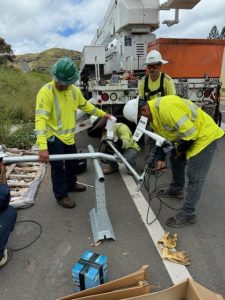
This data is delivered through a network of over 100 stations across high- and medium-risk circuits. All of these are equipped with R.M. Young Wind Monitors, chosen for their durability, accuracy, and ability to perform in Hawaii’s punishing conditions, from coastal salt spray to hurricane-force winds. In fact, one station at Ala Kahua Dr. recorded a 92.9 mph wind gust on August 24, 2024, a testament to both the severity of the conditions and the reliability of the sensors standing up to them.
Data That Drives Decisions
For Nathan Todaro, a consultant with Hawaiian Electric, the weather network is not an abstract data system; it’s a daily operational lifeline.
“I use the data from these weather stations in real time,” Todaro explained. “When we see wind gusts and humidity dropping below threshold levels, that’s when we know we need to act, whether it’s standing by for a potential shutoff or preparing for restoration. The accuracy and reliability of the data make all the difference.”
That precision paid off in July 2025, when Hawaiian Electric proactively shut off power in portions of Upcountry Maui that faced high wildfire risk.
“Weather data showed those areas were exposed to wind gusts and humidity levels that exceeded our PSPS thresholds,” said Ishikawa. “Our three primary criteria for shutting off power during a PSPS are persistent drought conditions, wind gusts 45 mph and higher, and relative humidity below 45%. Data from the weather stations helped us determine when conditions were safe enough to start the process of restoring service.”
A Partnership Built on Reliability
The success of this project reflects more than advanced technology; it’s rooted in decades of partnership and trust between R.M. Young Company and Western Weather Group.
“For more than 40 years, Western Weather Group has trusted R.M. Young instruments to deliver reliable performance in the field. Their sensors are durable, easy to maintain, and backed by excellent support. We still have wind monitors operating today that have performed for more than two decades with proper care,” says Nathan Lohse, CEO of Western Weather Group. “R.M. Young’s rugged, dependable equipment has made them a valued partner in our mission to provide high-quality weather monitoring, forecasting, and data services that help our clients manage and mitigate environmental risks.”
Together, R.M. Young and Western Weather Group have supported organizations across energy, transportation, and environmental sectors, providing the instrumentation and integration expertise needed to collect critical weather data, from mountaintops to coastlines.
Building a Network for the Future
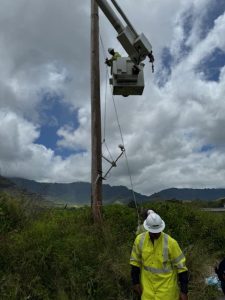
Western Weather Group worked closely with Hawaiian Electric to identify installation sites, train crews, and maintain the data network.
“Working with Western Weather Group and R.M. Young has been seamless,” said Todaro. “It’s not just the quality of the equipment; it’s knowing we have people we can call who understand our challenges and help us interpret what we’re seeing in the data.”
Each weather station serves a dual purpose: feeding real-time data into Hawaiian Electric’s PSPS decision framework and contributing to broader climate modeling. Data from the network is shared publicly through Synoptic and MesoWest, giving meteorologists, emergency responders, and community members access to the same conditions the utility monitors.
This transparency has strengthened relationships with regulators and local agencies while enhancing community trust, a key aspect of Hawaiian Electric’s 2025–2027 Wildfire Safety Strategy.
Technology That Endures
Behind the data are instruments built for endurance. R.M. Young sensors are engineered to operate continuously in extreme environments, from alpine peaks to coastal storm zones. Their proven field performance was a major factor in Hawaiian Electric’s decision to deploy them across its network.
“Our systems need to work in high humidity, salt air, and strong winds,” said Todaro. “The R.M. Young instruments have held up extremely well. They’re reliable, consistent, and don’t require a lot of maintenance. That kind of dependability matters when your decisions impact public safety.”
Lessons for Other Utilities
For utilities across the U.S. facing increasing wildfire risks, Hawaiian Electric’s experience offers several key takeaways:
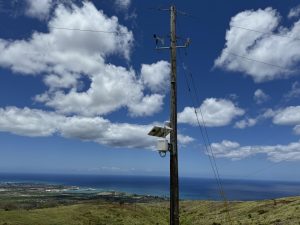
- Localized data saves time and prevents loss. Broad forecasts are not enough in complex terrain; localized, pole-mounted sensors deliver actionable insights.
- Partnerships matter. Working with experienced providers like Western Weather Group and R.M. Young ensures both the technology and the interpretation are sound.
- Reliability reduces risk. Instruments built to perform in extreme environments reduce downtime and uncertainty in critical moments.
- Transparency builds trust. Sharing data openly with agencies and the public strengthens collaboration and credibility.
A Stronger, Smarter Grid
The collaboration between Hawaiian Electric, Western Weather Group, and R.M. Young Company is more than a technology story, it’s a model for resilience. By combining reliable instrumentation, expert partnerships, and transparent data-sharing, Hawaiian Electric is building a safer, more adaptable energy system for the islands.
As Todaro put it, “When you’re watching wind gusts hit 70 or 80 mph in real time, you realize how vital good data is. You can’t prevent every storm or fire, but you can be ready for them. And that readiness starts with knowing exactly what’s happening in the field.”