

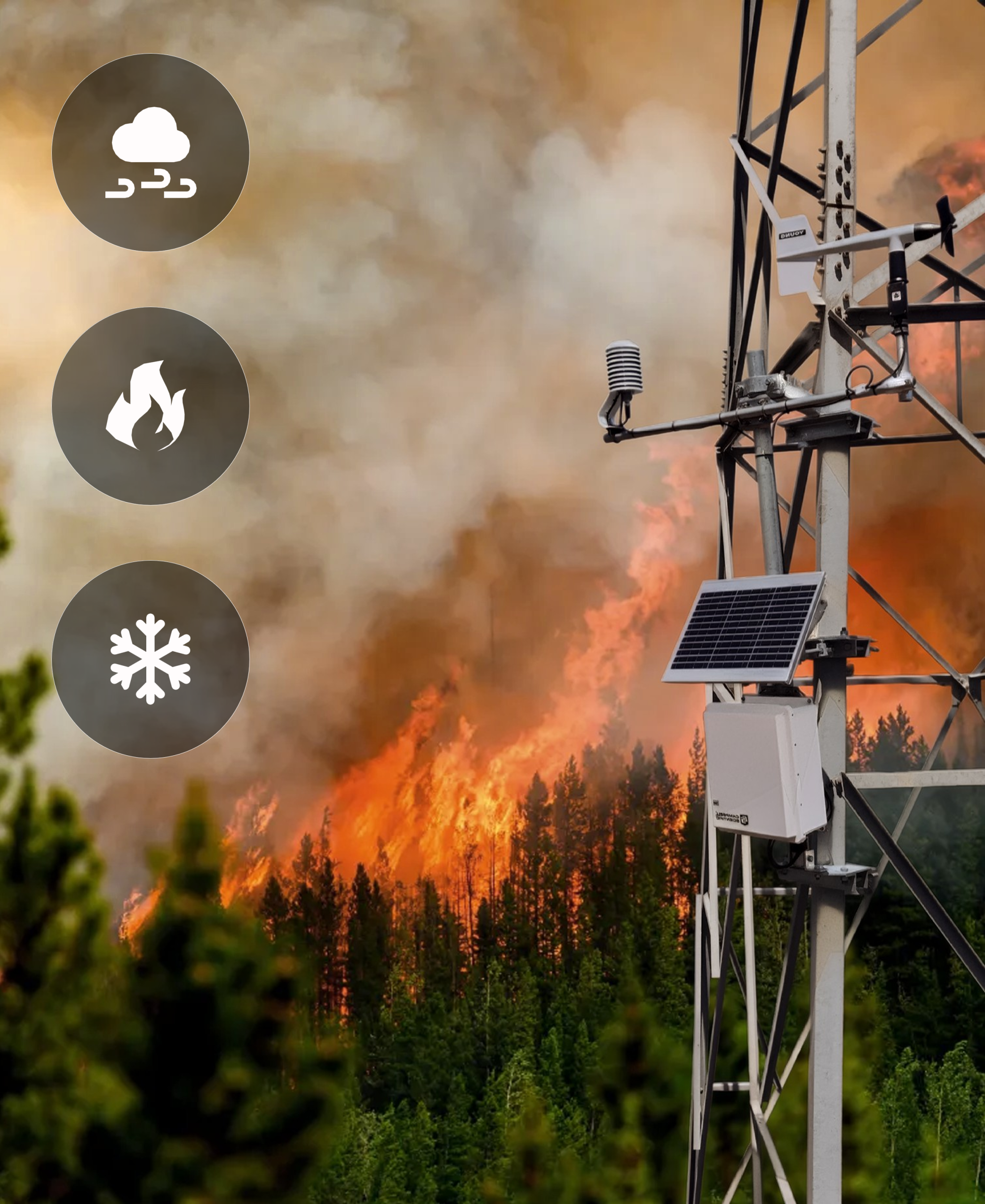
At our recent webinar with Western Weather Group, attendees asked some excellent questions about how utilities, technology providers, and communities can work together to make the power grid safer and more resilient. There were so many great questions, in fact, that we didn’t have time to cover them all! Here are answers to some of the questions that were asked along with a few we didn’t have time to answer.
1. How far in advance should utilities act on wildfire forecasts?
Answer: Utilities use long-term seasonal outlooks (30–90 days) to prepare in advance for areas prone to dry fuels or historical line issues. Short-term forecasts (daily or weekly) guide real-time operational decisions, such as responding to incoming storms or high-wind events. Essentially, outlooks shape the game plan, and forecasts drive immediate action.
2. Which environmental variables shift risk the fastest during a developing fire event?
Answer: The fastest-changing factors are:
- Wind shifts – even a few degrees can double wind speed in valleys or slopes.
- Relative humidity – can change significantly within minutes, affecting fuel moisture.
- Lightning and other extreme weather events – may appear suddenly and spark fires.
Terrain and geography also influence how these variables affect wildfire spread. Microclimatology also plays an important role in how certain variable can interact with the environment and certain setups can make hazardous regions much riskier.
3. How is the wildfire probability index defined and how far ahead can it predict risk?
Answer: The index is fuel-focused, incorporating:
- Long-term precipitation and temperature
- Snowpack levels (snow water equivalent)
- Ongoing drought conditions
- Fuel chemistry and ignition probability
It can be applied at 30–90 day scales for seasonal planning, with potential to integrate longer-term climate teleconnections for strategic insights.
4. How important is snow water equivalent (SWE) in projecting fire risk?
Answer: SWE tracks snowpack and early fuel moisture. Higher SWE keeps large fuels (logs, duff layers) saturated longer. Low SWE indicates earlier meltout, starting the clock on fuel drying and higher fire risk. Coupled with precipitation and fuel moisture data, SWE helps utilities anticipate fire season timing.
5. How are pressure measurements used for fire intelligence?
Answer: Pressure sensors help identify pressure gradients that drive wind, which is critical for fire behavior. Combined with strategically placed wind and terrain sensors, they allow utilities to anticipate wind events in microclimates that broader forecasts might miss. Sensor placement and data logging frequency are installation-specific.
6. How often should forecast inputs and risk assessments be revisited during high-risk periods?
Answer: Real-time data monitoring is key. During high-risk periods:
- 15-second to 15-minute updates are valuable
- Dedicated resources should track changing wind, humidity, and other metrics
Even a single spark can escalate risk, so frequent assessment ensures utilities stay ahead.
7. Can existing weather stations be integrated with wildfire intelligence systems?
Answer: Yes, if sensors are reliable and calibrated. Older or low-quality hardware may give false positives or miss events. For maximum accuracy, integrating modern calibrated systems is recommended.
8. Are there solutions for high-risk microclimate zones?
Answer: Yes. Tailored monitoring in microclimates allows utilities to respond to local conditions that broader regional forecasts may not capture. Through monitoring, you can create a profile of risk. For example, which slopes produce greater winds, what areas receive less shade, etc., which allows for an intelligence leg up when creating mitigation and operations plans.
9. How do these systems help utilities mitigate wildfire risk?
Answer: By combining high-fidelity environmental data with predictive analytics, utilities can:
- Adjust grid operations proactively
- Deploy resources to high-risk areas
- Issue warnings to the public
This reduces the impact of extreme weather and wildfire events.
10. Where are these systems currently in use?
Answer: Utilities are deploying these technologies across the U.S. (California, Colorado, Hawaii) and internationally in Canada and Europe to manage grid power and wildfire risk.
For more information and to learn more about utilizing accurate, reliable weather data to mitigate wildfire risk, check out our webinar on demand now.