

At Caberfae Peaks, weather isn’t just something to watch—it’s something that directly shapes every operational decision.
Located in northern Michigan, Caberfae Peaks is a four-season resort offering skiing, golf, lodging, and events. But during the winter months, one variable rises above the rest in importance: wind.
For ski resorts, wind isn’t just a comfort factor, it’s a safety threshold. Gusts and shifting directions can determine whether lifts continue running or must be slowed or stopped altogether. And those decisions often need to be made in real time.
Before installing dedicated instrumentation, the Caberfae team relied on a mix of forecast data and on-the-ground observation. Hourly updates from the National Weather Service and The Weather Channel provided a general picture, but conditions at lift height didn’t always match what was happening elsewhere. Staff made judgment calls based on what they could see and feel, comparing that to forecasted conditions.
It worked—but it left room for uncertainty.
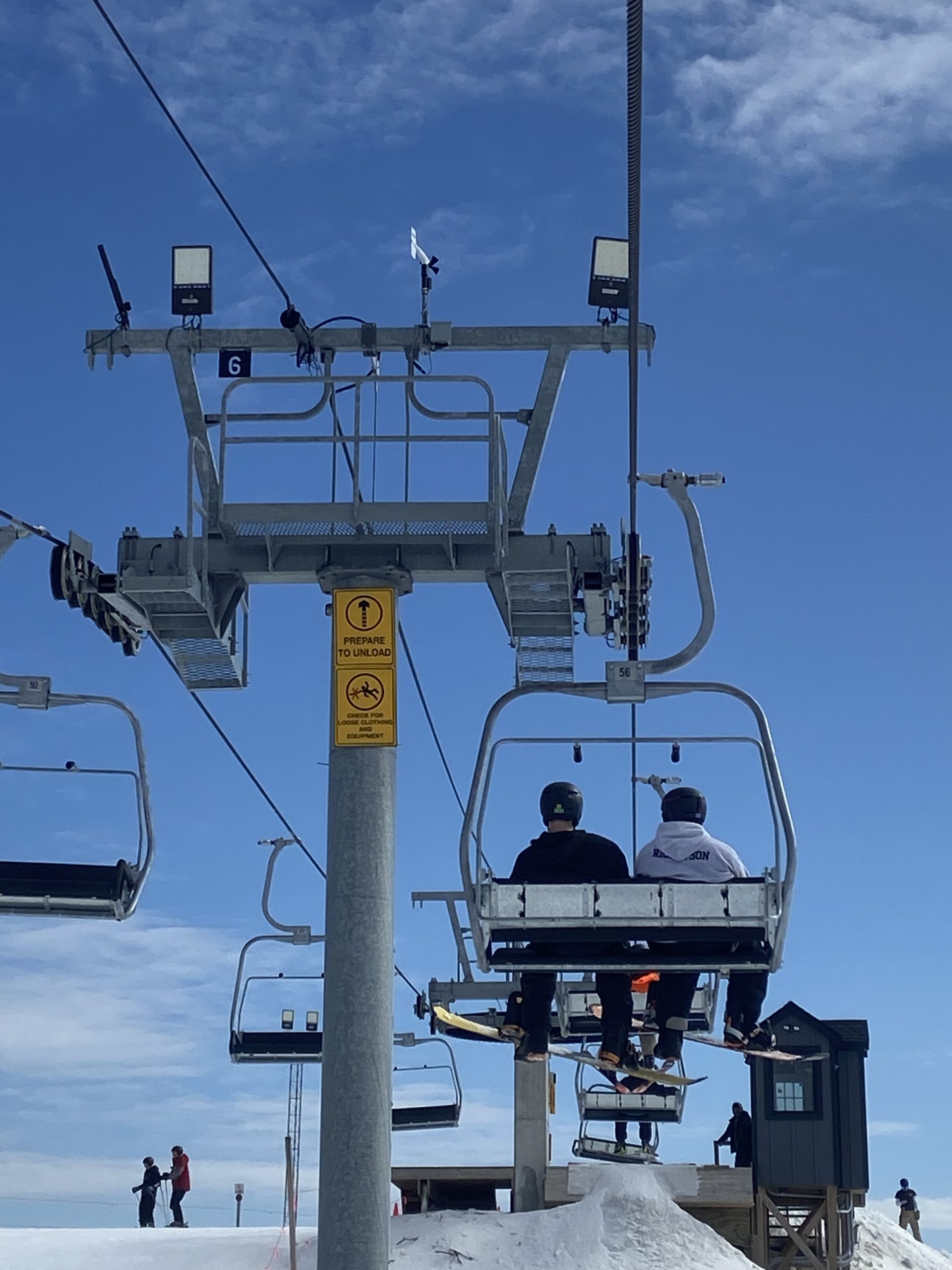
That changed in 2022 with the installation of a new Doppel Mayr ski lift. Integrated into the system was an R.M. Young Wind Monitor, mounted at the top of Tower 6 on the East Peak lift.
For the first time, the resort had access to real-time, site-specific wind speed and direction data exactly where it mattered most.
The difference was immediate.
Instead of relying on regional forecasts and visual cues, operators could now see precisely what was happening at lift height, including peak gusts, changing wind direction, and how close conditions were to operational limits. The system also provided historical data and introduced an added layer of safety: when wind speeds exceed predefined thresholds, the lift automatically slows or halts operation.
“It helps us determine whether it is safe to operate the ski lifts,” said Tim Meyer, Mountain Operations Manager. “It helps us see how close we are to unsafe operational conditions. The anemometer lets us see peak gusts and directions. This data is invaluable to the decision-making process.”
Wind, however, is only part of the equation.
At Caberfae Peaks, temperature and humidity measurements play an equally critical role—particularly in snowmaking operations. A weather station installed at the pumphouse monitors both parameters and calculates wet bulb temperature, which determines when conditions are optimal for producing snow. Even small changes in temperature or humidity can significantly impact snowmaking efficiency, making accurate, reliable measurements essential.
In an environment where every minute of uptime matters, that level of visibility is critical. It allows Caberfae Peaks to operate with confidence — maximizing lift availability when conditions allow, while ensuring safety when they don’t.
And just as importantly, the instrumentation has proven itself in the field.
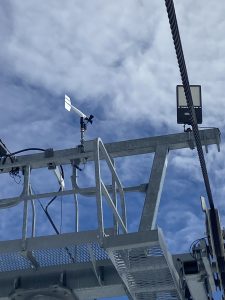
From its installation in 2022 through the winter seasons that followed, the anemometer performed reliably in harsh conditions. The only interruption came in December 2025, when a power surge damaged the circuit board. After repair and recalibration by R.M. Young Company, the unit was quickly returned to service.
Today, environmental data is one of the most influential inputs in operational decisions at Caberfae Peaks — guiding when lifts run, when they slow, when they stop, and when snowmaking can begin.
“It is invaluable to have reliable wind direction and speed data,” Meyer noted. “It provides the most influential data when we are deciding whether to operate or not operate.”
That confidence has led the resort to look ahead. Based on their experience, Caberfae Peaks is now considering additional Wind Monitors at other locations across the mountain.
Because when conditions can change in an instant, having accurate, site-specific data isn’t just helpful—it’s essential.