

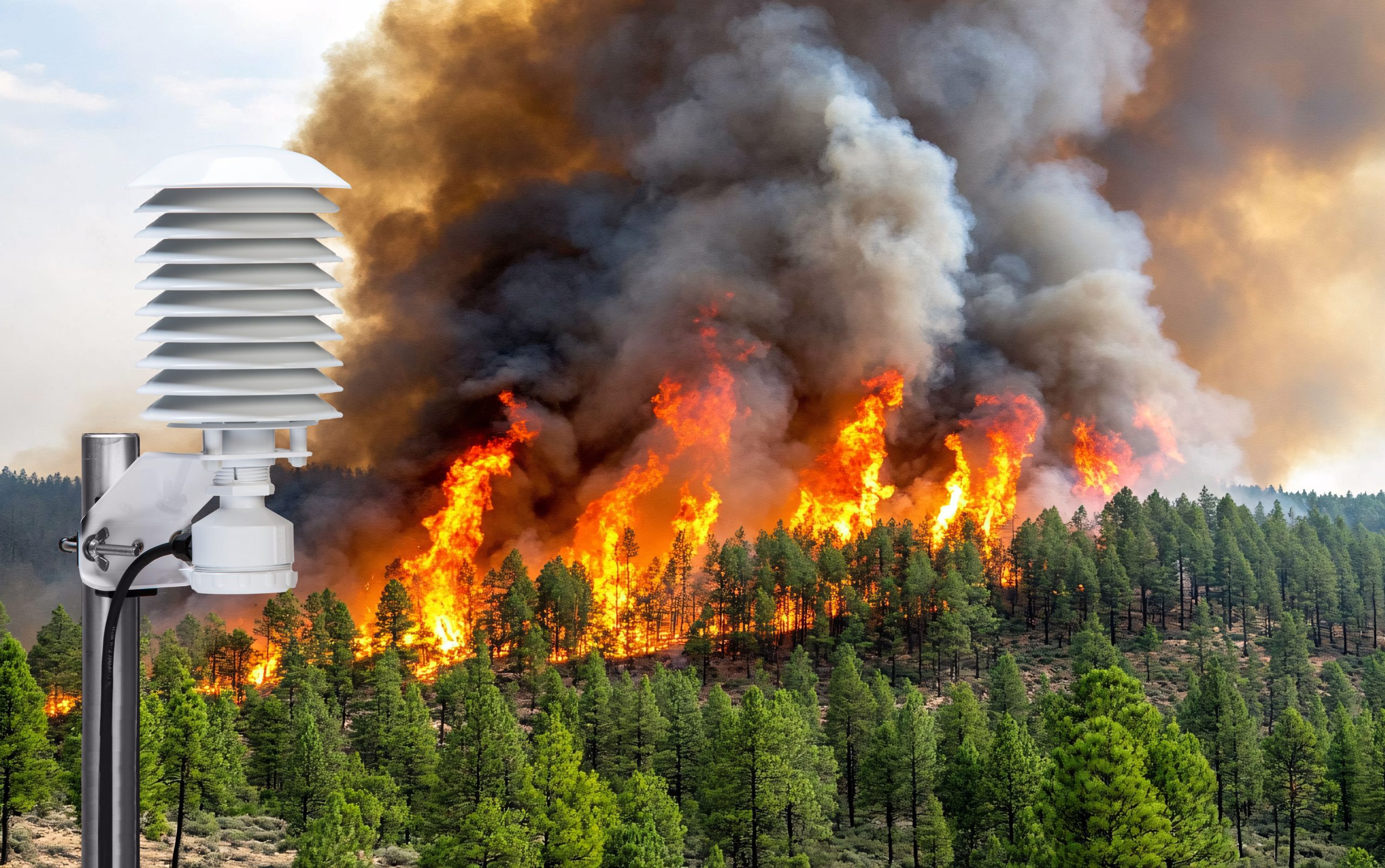
During the recent webinar Powering Safer Grids with Wildfire Forecast Intelligence + Rugged Weather Hardware, Conor Byrne, Engineering Manager at R.M. Young Company, and Austin Patrick, Meteorologist at Western Weather Group, discussed how temperature and relative humidity data can help improve wildfire forecast accuracy. Wildfire risk is influenced by many environmental factors, but air temperature and relative humidity are two of the most important indicators of fuel conditions. When monitored consistently and in the right locations, these measurements can provide valuable insight into fuel volatility and help improve wildfire forecast accuracy.
Why Temperature and Relative Humidity Matter
Temperature and relative humidity play a critical role in determining fuel moisture and volatility. As temperatures rise and humidity drops, vegetation and other fuels lose moisture, becoming more susceptible to ignition and rapid fire spread.
By monitoring these variables over time, meteorologists and fire weather analysts can identify trends that indicate when fuels are becoming increasingly receptive to fire. This historical perspective provides valuable context when evaluating wildfire risk, especially when paired with other atmospheric and environmental data.
The Importance of Long-Term Data
Short-term weather observations provide a snapshot of current conditions, but wildfire forecasting benefits significantly from historical environmental data.
Consistent temperature and humidity measurements collected over months or years allow forecasters to understand patterns such as:
- Seasonal drying trends
- Rapid changes in fuel moisture
- Persistent low-humidity events
- Localized microclimates that influence fire behavior
When this historical information is combined with real-time observations and forecasting models, it helps improve the accuracy of wildfire outlooks and operational decision-making.
Strategic Sensor Placement Improves Forecast Insight
Equally important is where weather measurements are collected.
Sensors placed in representative locations across high-risk areas provide a clearer picture of how conditions vary across a landscape. Strategic placement allows forecasters to capture meaningful environmental signals that may otherwise be missed by sparse or poorly positioned instrumentation.
Well-placed weather stations measuring temperature, humidity, wind, and other variables help build a more complete understanding of wildfire risk across utility service territories and other vulnerable regions.
Supporting Safer Grid Operations
For electric utilities operating in wildfire-prone regions, accurate environmental data is critical for informed decision-making. Weather observations support a range of wildfire mitigation strategies, including operational planning, situational awareness, and forecast modeling.
By combining high-quality meteorological measurements with advanced wildfire forecasting tools, utilities can better anticipate elevated fire risk and take proactive steps to protect communities and infrastructure.
As wildfire seasons continue to grow longer and more intense, the combination of reliable weather instrumentation and advanced forecasting expertise will play an increasingly important role in supporting safer, more resilient power systems.