

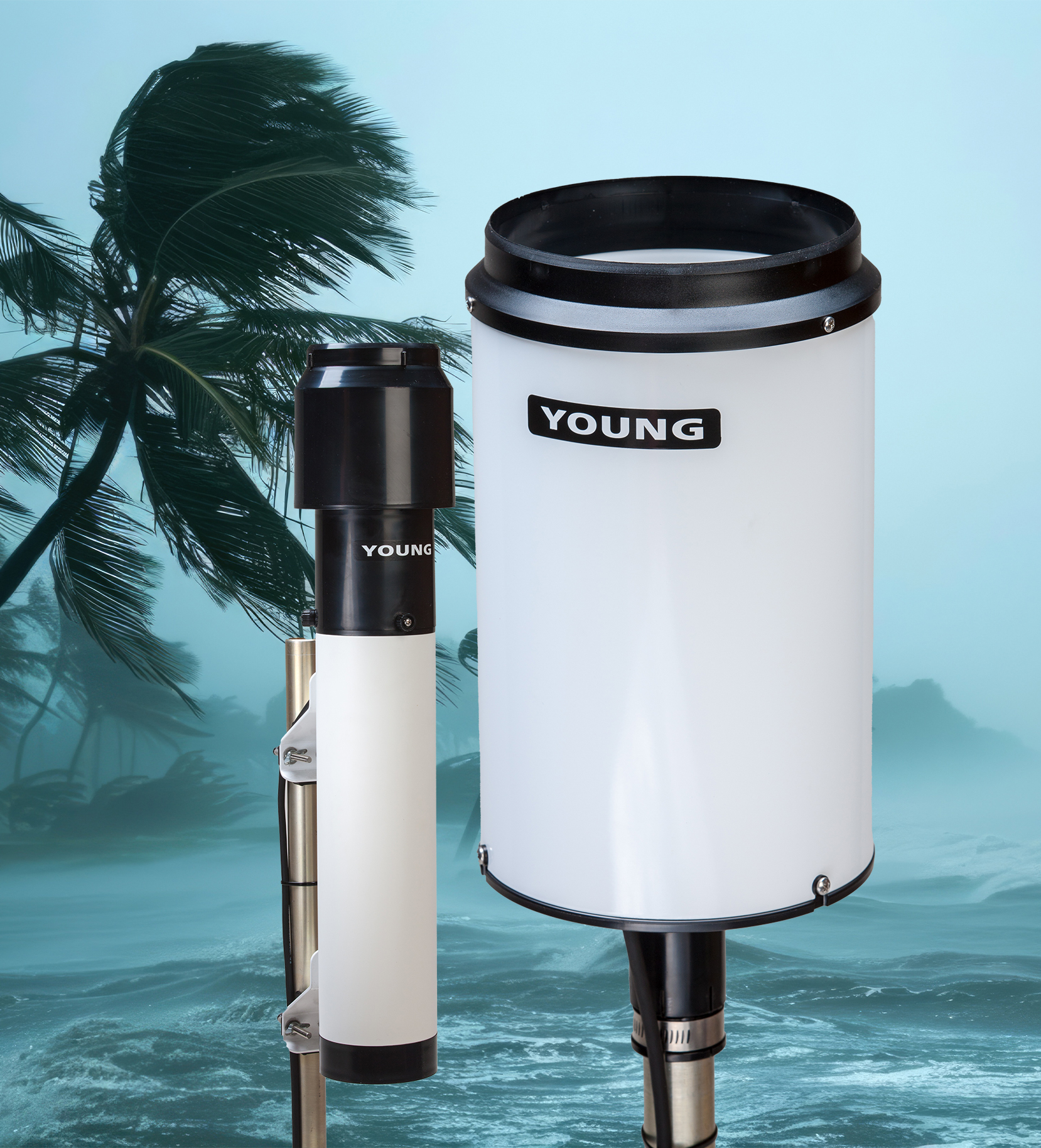
When it comes to measuring precipitation, accuracy and reliability are essential. Two of the most commonly used instruments for this task are tipping bucket and siphon precipitation gauges. Both serve the same purpose—measuring how much rain has fallen—but they operate in very different ways and are best suited for different environments. Let’s break down how each works and when to choose one over the other.
How a Tipping Bucket Rain Gauge Works
A tipping bucket rain gauge consists of a small bucket mounted on a pivot. As rain falls into the bucket, it fills up until it reaches a set weight—typically equivalent to 0.1 millimeters of rainfall. At that point, the bucket tips over, emptying its contents and triggering a counter. The opposing bucket swings into place and begins filling, repeating the process. The gauge keeps track of the number of times the bucket tips to calculate total rainfall. This design makes tipping bucket gauges compact, cost-effective, and easy to maintain. However, during periods of very heavy rain, water can fill and tip the bucket too quickly, leading to underreporting of total precipitation. Additionally, intense rainfall or moving platforms can cause splashing, which may also affect accuracy.
Best for: Moderate climates, routine monitoring, and stationary applications where maintenance access is easy and rainfall rates are generally steady.
Advantages:
- Compact and lightweight
- Cost-effective and easy to maintain
- Provides high temporal resolution for rainfall events
- Compatible with many dataloggers and telemetry systems
Limitations:
- Not ideal for moving platforms such as buoys and vessels, as the movement can disrupt the tipping mechanism
- Can underreport during very high-intensity rainfall, as water may overflow before the bucket tips
- Prone to mechanical wear over time
- May be impacted by debris or insects blocking the funnel
How a Siphon Precipitation Gauge Works
A siphon precipitation gauge uses a different principle. A siphon precipitation gauge uses a different principle. Rainfall is collected through a funnel and directed into a sealed chamber, where a highly accurate capacitive sensor measures the rising water level. The output is a smooth, linear 0–5 VDC signal corresponding to 0–50 mm of accumulated rainfall, allowing users to monitor even the lightest drizzle with exceptional resolution. When the chamber reaches its 50 mm capacity, a built-in siphon automatically empties it in one quick motion. This self-resetting process eliminates the need for manual intervention and ensures uninterrupted measurement. Because of this design, siphon gauges excel at handling high-intensity rainfall and offer more precise measurements in extreme weather events. They are also better suited to automated weather stations that require high-resolution data.
Best for: Remote or rugged environments, high-rainfall areas, research applications where accuracy under heavy precipitation is critical, and moving platforms such as research vessels and ocean buoys.
Advantages:
- Ideal for high-intensity rainfall or mixed precipitation (rain, snow, sleet)
- Provides accurate continuous measurements, not limited to increments
- No mechanical tipping components, which reduces wear and tear and makes it ideal for moving platforms
- Often integrated with heaters for cold weather operation
Limitations:
- Typically larger, heavier, and more expensive than tipping bucket gauges
- May require more complex maintenance or cleaning
- Slower response to small amounts of rainfall compared to tipping bucket
Which One is Right for You?
Both tipping bucket and siphon precipitation gauges are valuable tools in the meteorologist’s arsenal. The right choice depends on your specific environment, data accuracy requirements, and budget. For many standard applications, the tipping bucket provides solid, dependable data. But for extreme conditions, moving platforms, mixed precipitation, or when you need the highest accuracy, the siphon gauge is often worth the investment.
Choosing between a tipping bucket and a siphon precipitation gauge comes down to your specific needs:
- Need simple, durable, and cost-effective? Go with a tipping bucket.
- Need high precision during heavy rain events or in remote locations? A siphon gauge is likely your best bet.
At R.M. Young, we offer both types of gauges—each designed to deliver dependable, accurate data when and where it matters most.
Still unsure? We’d be happy to help you select the right sensor for your application—rain or shine. Contact our team of experts—we’re here to support you!