

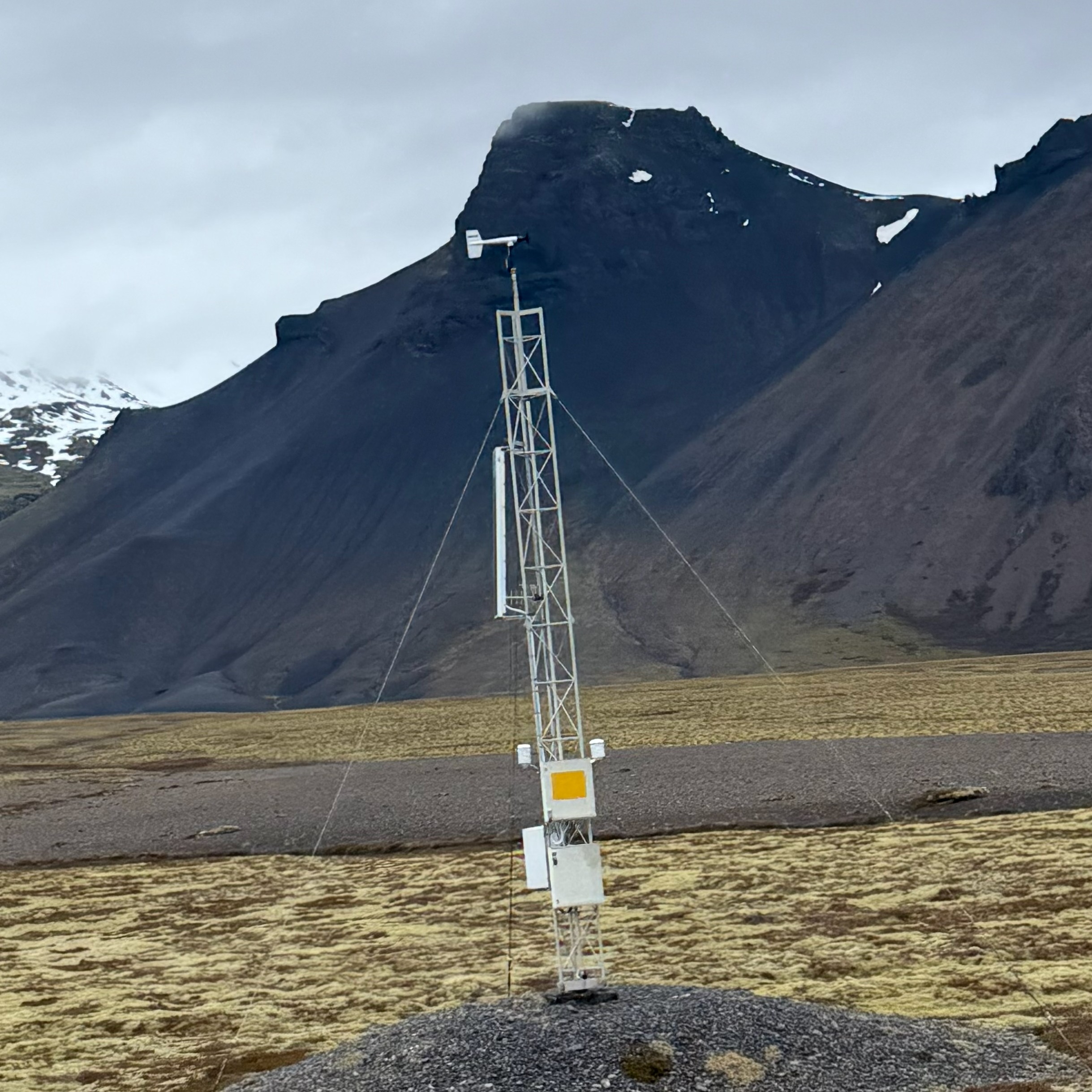
When weather data drives decisions that affect public safety, infrastructure, or regulatory compliance, the selection of the instrument used for collecting that data is not a simple commodity purchase. It is a liability decision.
Consumer weather stations have never been more capable or affordable. For a few hundred dollars, organizations can deploy compact, wireless sensors and stream data instantly to a dashboard or app. For homeowners and low-stakes applications, that is a genuine value.
But for utilities managing grid infrastructure, transportation agencies monitoring road conditions, aviation operators, emergency managers, wildland fire agencies, or industrial facilities, the question is not whether a consumer station is affordable. It is whether the data it produces is defensible, and what happens when it isn’t.
What “Defensible Data” Actually Means
Defensible data is data you can stand behind when it matters most: in a regulatory proceeding, an insurance claim, a post-incident review, or litigation.
To be defensible, weather data must be:
- Traceable. The instrument’s accuracy can be documented and verified against a known standard.
- Auditable. A record exists showing the instrument was calibrated, maintained, and functioning at the time of the measurement.
- Continuous. There are no gaps in the data record during the period when decisions were made.
- Accurate. The measurement method is appropriate for the application and meets established standards.
Consumer weather stations are not designed to meet these requirements. Professional-grade instruments are.
5 Ways Consumer Weather Stations Create Hidden Costs
1. Calibration You Can’t Document
Professional weather instruments ship with calibration certificates. NIST-traceable calibration, meaning accuracy is documented against national measurement standards, is available on request. If a decision is ever questioned, the calibration record exists and can be produced.
Many consumer stations now apply automated, machine-learning-based field calibrations that adjust readings algorithmically over time. These calibrations are not documented, not traceable, and cannot be verified after the fact. If your data is audited, there is no certificate to show.
2. Data Gaps When You Can’t Afford Them
Consumer weather stations increasingly depend on Wi-Fi, cloud hubs, and third-party platforms to transmit and store data. When connectivity fails, which is most likely during the severe weather events when operational decisions are being made, the data record is susceptible to having gaps due to available service which are outside of the control of the weather station owner.
Think of a flight data recorder. It doesn’t depend on Wi-Fi. It doesn’t route through a cloud platform. It captures everything, continuously, and the record it produces is the one that gets examined when something goes wrong. Professional weather instrumentation works on the same principle. A professional instrument with hardwired power and direct serial output delivers continuous data independent of network conditions. The customer owns and controls the data record from instrument to storage. No third-party platform. No connectivity dependency. No gaps.
3. Compliance Standards Consumer Stations Don’t Meet
Multiple regulatory and standards frameworks either explicitly or implicitly require traceable, auditable data. Whether your application falls under NWCG fire weather standards, FAA aviation requirements, FHWA road weather guidelines, or NERC utility reliability standards, the underlying requirement is the same: accurate, documented, auditable data from instruments designed and maintained to a professional standard. Consumer stations were not built to satisfy these frameworks, and no amount of affordability changes that.
4. Replacement Costs That Compound at Scale
A consumer station that fails requires full unit replacement: a site visit, reinstallation, and reconfiguration. At a deployment of hundreds or thousands of locations, even a modest annual failure rate generates significant labor and logistics cost.
Professional-grade instruments are built to a different standard from the ground up. Robust sensor construction, corrosion-resistant materials, and designs hardened for continuous operation in demanding environments mean fewer failures to begin with. When service is needed, field serviceability keeps downtime short and truck rolls to a minimum. Over a 10-year network lifecycle, the combination of higher reliability and lower maintenance burden compounds into a significant total cost of ownership advantage.
5. Liability When Decisions Are Questioned
This is the cost that doesn’t appear in a procurement spreadsheet until it’s too late.
When a weather-driven operational decision is reviewed in a PSC rate case, a NERC compliance audit, an insurance claim, or litigation, the organization must demonstrate that its instruments were accurate, calibrated, and functioning at the time of the decision. A consumer station with automated, non-traceable calibration and no service history cannot provide that documentation.
Hawaiian Electric faced claims that it failed to act on weather data before the 2023 Maui wildfires, contributing to a settlement totaling over $4 billion. Georgia Power is currently seeking $912 million in PSC storm cost recovery following Hurricane Helene, and every operational decision made during that storm is now part of a formal regulatory proceeding.
What Professional-Grade Actually Means
The difference between consumer and professional instrumentation is not just price. It is a fundamentally different design philosophy, supply chain, and accountability structure.
R.M. Young Company is ISO 9001:2015 certified, meaning our quality management systems, manufacturing processes, and documentation practices meet internationally recognized standards for consistency and traceability. We design and manufacture our instruments in Traverse City, Michigan, controlling the entire process from component selection through final calibration. That vertical integration means there are no gaps in the chain of accountability, and no ambiguity about where a problem originated or how it was resolved.
Our instruments are backed by over 60 years of engineering expertise in operational meteorology. When something goes wrong in the field, you reach people who built the instrument and understand the application, not a consumer support queue. That institutional knowledge matters when conditions are severe, time is short, and the data has to be right.
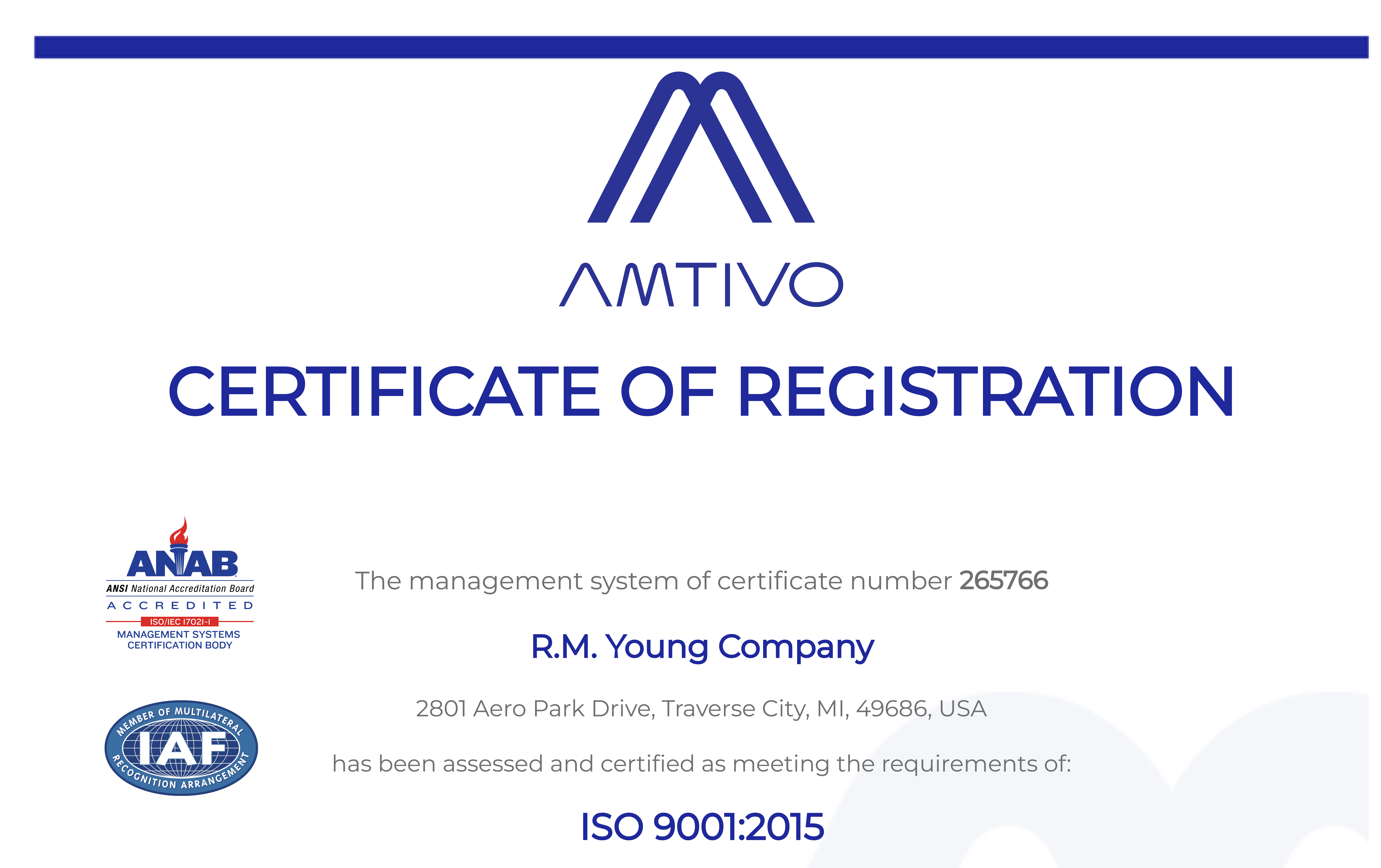
R.M. Young Company is ISO 9001:2015 certified through Amtivo, an ANAB-accredited certification body.
The Right Tool for the Right Application
Consumer weather stations are fine products for the applications they were built for. Home weather monitoring, agricultural hobbyists, education programs, and low-stakes environmental applications all benefit from affordable, accessible instrumentation.
But when weather data informs decisions that affect public safety, grid reliability, transportation infrastructure, or regulatory compliance, the instrument behind that data must meet a higher standard: traceable calibration, field serviceability, continuous locally controlled data, and documented maintenance history.
The question is not which station is cheaper. It is which station produces data you can stand behind, and whether that data will hold up when it matters most.