
The Importance of Airport Weather Data Redundancy
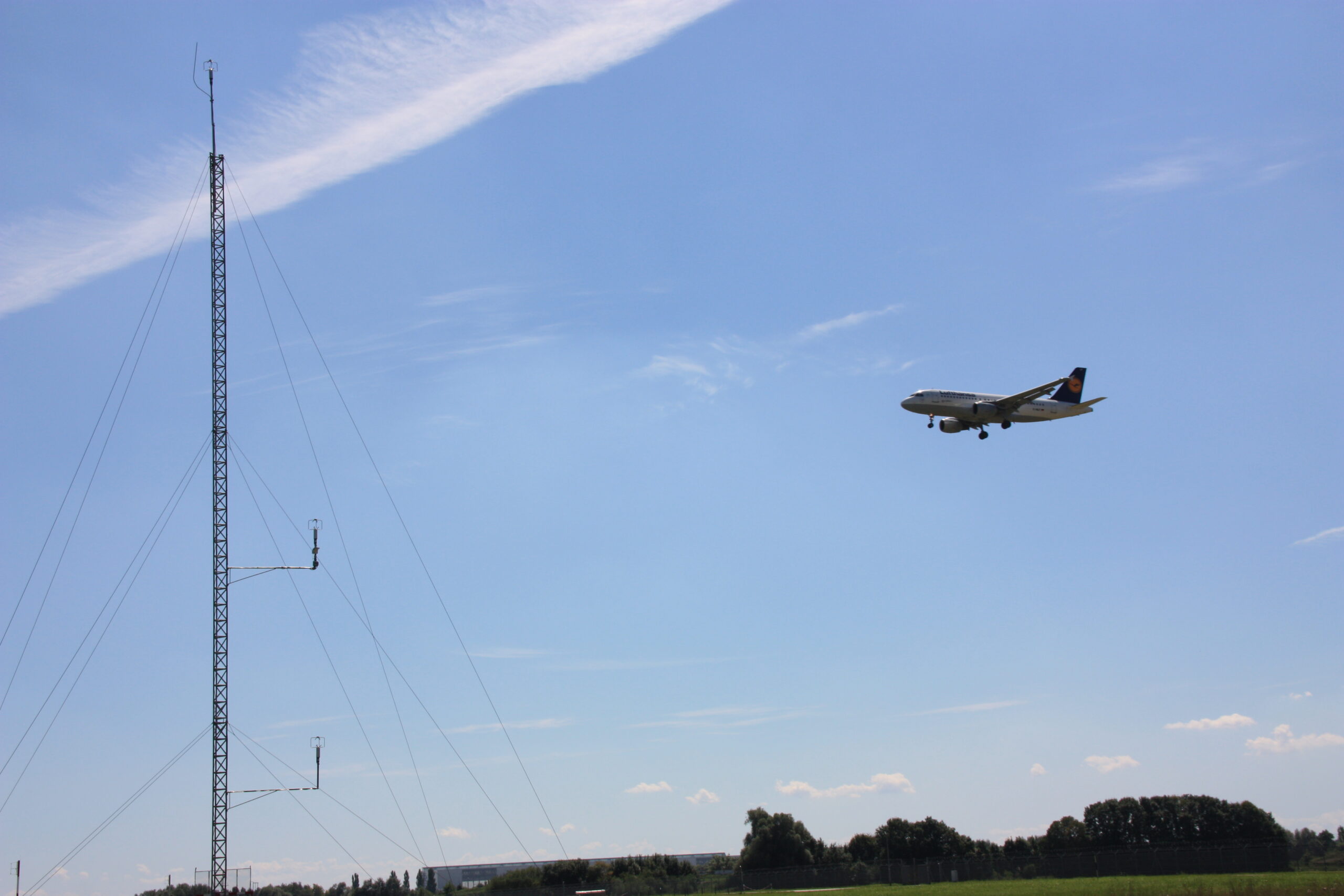
At a busy commercial airport, dozens of decisions happen every hour that depend on accurate, real-time weather data. Runway assignments. Takeoff and landing clearances. Ground crew safety calls. De-icing operations. Fuel load calculations. Each one informed, at least in part, by what the sensors on the airfield are reporting.
So what happens when that data disappears—or worse, when it’s wrong and nobody knows it?
The answer isn’t theoretical. Weather sensor failures happen. They happen because of lightning strikes, ice accumulation, bearing wear, power interruptions, and simple age. When they do, the consequences range from operational disruption to genuine safety risk. A single anemometer reporting stale or erroneous wind speed data can trigger unnecessary ground stops, delay dozens of flights, or—in a worst-case scenario—contribute to a decision made on bad information.
The question isn’t whether your sensors will ever fail. It’s whether your airport is designed to handle it when they do.
Redundancy Is Only as Good as the Sensors Behind It
FAA requirements mandate weather data redundancy at commercial airports — so the question isn’t whether your airport has a backup system. The question is whether that backup system is actually capable of doing its job when the primary fails.
There are two layers to this worth examining.
The first is sensor-level redundancy: The backup sensors deployed at the same location to take over if a primary unit fails. These are common at high-criticality monitoring positions like runway ends, tower installations, and remote sensing sites. But a backup sensor that hasn’t been properly maintained, calibrated, or validated against the primary is not a reliable fallback—it’s a false sense of security.
The second is system-level redundancy: Multiple sensors distributed across different locations on the airfield to build a cross-verifiable picture of conditions. Wind behavior varies significantly across a large airport footprint, and a reading at one runway threshold may not reflect what’s happening at another. A well-designed system uses that distribution to catch anomalies, validate data in real time, and flag when something isn’t right.
Meeting the regulatory minimum and operating a genuinely resilient system are not the same thing. The airports that close that gap treat backup infrastructure with the same rigor they apply to primary systems—same sensor quality, same calibration discipline, same performance expectations.
What You’re Actually Measuring
Reliable airport weather monitoring isn’t just about wind. A complete picture requires multiple measurement types working in concert.
Wind speed and direction are the most operationally visible parameters, directly tied to runway selection, crosswind limits, and wake turbulence protocols. Airports rely on two primary sensor technologies for this measurement. Mechanical sensors like the Wind Monitor have been the workhorse of airfield wind measurement for decades, valued for their accuracy, durability, and proven performance in demanding environments. Ultrasonic wind sensors have become equally common, eliminating moving parts entirely and reducing long-term maintenance requirements. For airports that require a more complete atmospheric picture, 3D ultrasonic sensors add vertical wind measurement to the mix — a valuable capability for sites where turbulence characterization or wind shear detection is a priority.
Temperature and relative humidity inform everything from density altitude calculations to fog forecasting and de-icing decisions. Accurate, well-aspirated sensors at representative locations across the airfield are essential for data that reflects actual conditions rather than localized microclimate artifacts.
Barometric pressure underpins altimeter settings, one of the most safety-critical data points in aviation. Pressure sensor failures are rare but consequential. Redundant pressure monitoring is a straightforward insurance policy against an outsized risk.
Each of these measurement categories benefits from the same redundancy logic: more than one sensor, more than one location, more than one path for the data to travel.
Reliability Is a System Property
A common misconception is that investing in high-quality sensors eliminates the need for redundancy. It doesn’t. Quality and redundancy serve different functions. A high-quality sensor reduces the probability of failure and improves measurement accuracy under normal conditions. Redundancy determines what happens when failure occurs anyway.
The airports with the most operationally resilient weather monitoring treat reliability as a system property, not a product specification. They specify sensors with proven field performance, design for backup coverage at critical positions, and plan for maintenance access and sensor serviceability over the long term.
Total cost of ownership matters here. Sensors that are built to last, easy to service in the field, and supported by a manufacturer with deep application expertise don’t just perform better, they reduce the operational burden of keeping a redundant system running over years and decades of service.
The Cost of Getting It Wrong
A single weather-related ground stop at a major hub can cost hundreds of thousands of dollars in delays, diversions, and passenger disruption. The regulatory and liability exposure of a safety incident tied to instrumentation failure is harder to quantify and harder to recover from.
Redundant weather monitoring is not a luxury infrastructure item. It’s a foundational element of airfield operational integrity, and the cost of getting it right is a fraction of the cost of getting it wrong.
R.M. Young Company has been trusted by airports, meteorological agencies, and critical infrastructure operators around the world for over 60 years. Our instruments are built for the environments where failure isn’t an option. We’d be happy to help you build a system that holds up when it matters most.